TheJakartaPost
Please Update your browser
Your browser is out of date, and may not be compatible with our website. A list of the most popular web browsers can be found below.
Just click on the icons to get to the download page.


Popular Reads
Top Results
No results found. Please check your search term and try again
Can't find what you're looking for?
View all search results
Popular Reads
Top Results
No results found. Please check your search term and try again
Can't find what you're looking for?
View all search resultsCatholic students learn about tolerance during Cap Go Meh celebration
Twenty five students from Maria Goretty junior high school in Semarang, Central Java, visited the Chinese Tay Kak Sie temple, one of the oldest in the city, during the Cap Go Meh celebration on Saturday.
Change text size
Gift Premium Articles
to Anyone
Share the best of The Jakarta Post with friends, family, or colleagues. As a subscriber, you can gift 3 to 5 articles each month that anyone can read—no subscription needed!
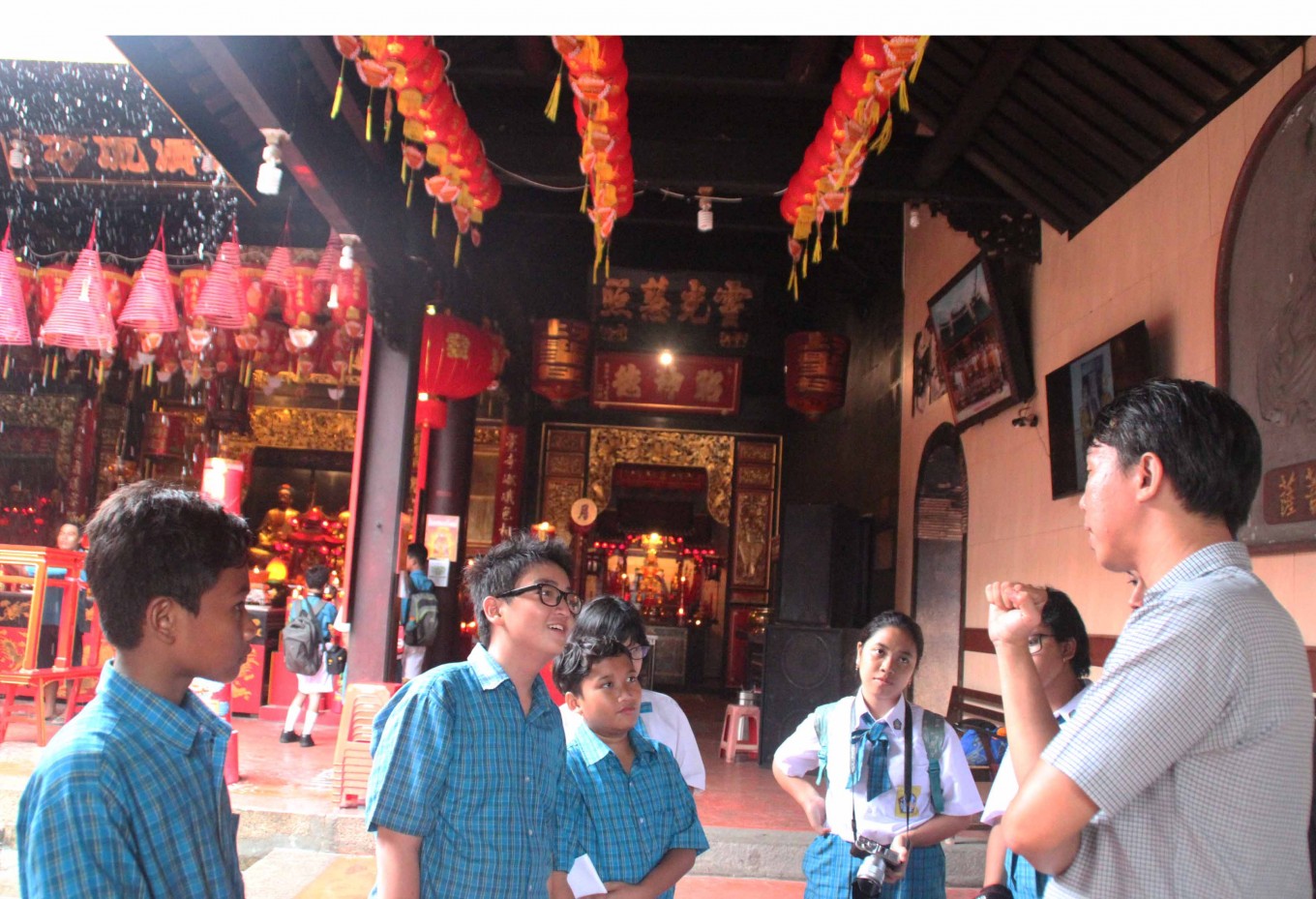 Students from Maria Goretty junior high school in Semarang, Central Java, visited the Chinese Tay Kak Sie temple during the Cap Go Meh celebration on Saturday. (JP/Suherdjoko)
T
wenty five students from Maria Goretty junior high school in Semarang, Central Java, visited the Chinese Tay Kak Sie temple, one of the oldest in the city, during the Cap Go Meh celebration on Saturday.
Cap Go Meh is a Chinese celebration observed 15 days after Chinese New Year, locally known as Imlek.
“We take them here to see how followers of other faiths celebrate their religious festivals and also how they worship. This is meant to teach them about tolerance from an early age,” Tutut Purwaningsih, one of the teachers, said.
The students said it was their first visit to the Chinese temple, which was built in the 18th century and has now become a place of worship for the followers of Buddhism, Confucianism and Taoism.
“This was my first visit here. I wrote down all the names of the Gods,” Octavianus Benny, one of the students, said.
Hariyanto, the secretary of the foundation that manages the temple, was asked by the students why the temple has so many Gods.
“This is a form of respect to our ancestors. In our religion, we are obligated to respect our ancestors […] some of the Gods were once good people who spent their whole lives helping people. We call them Gods. This is our culture,” he said. (ary)